Two Long Beach Homes, Same List Price, Very Different Monthly Bills
August 20, 2026
August 20, 2026
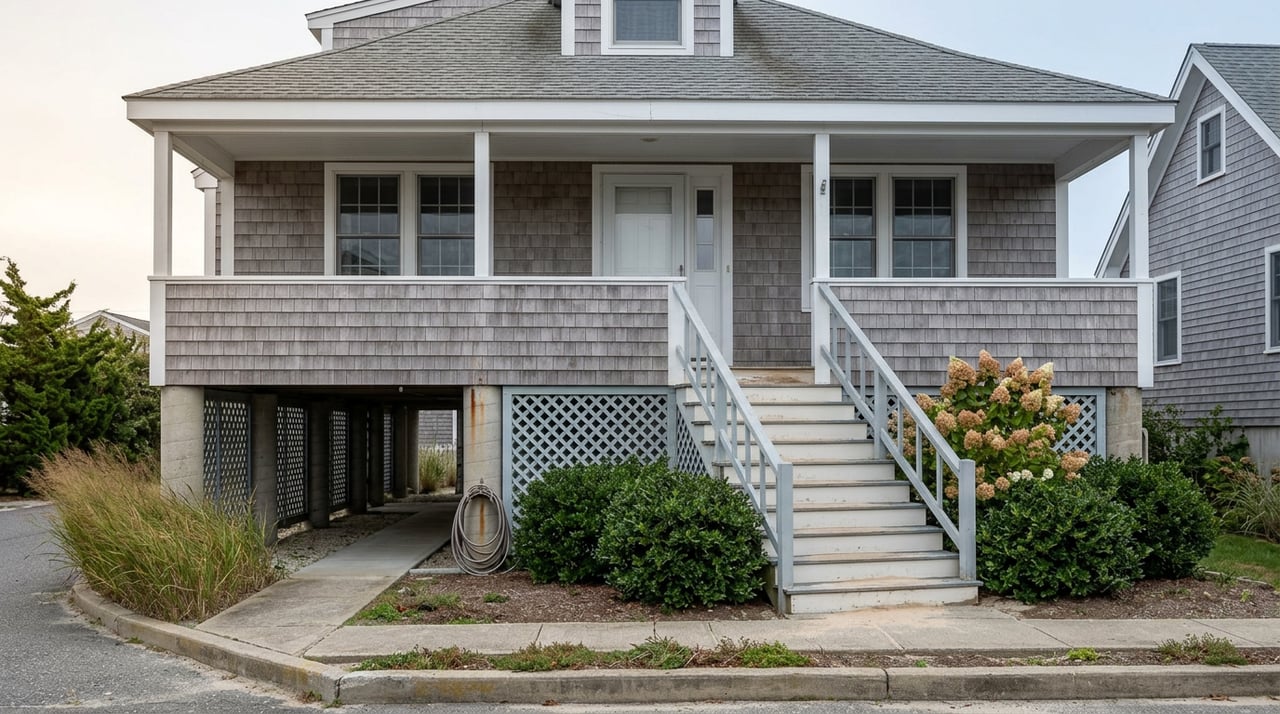
Picture two houses three blocks apart in Long Beach. Same square footage, same asking price, same year built. A buyer comparing them on a portal would see identical numbers and assume the decision comes down to taste. It doesn't. One of those homes might carry a flood insurance bill that runs several hundred dollars a month less than its twin, and the reason has nothing to do with which block is closer to the water.
That gap is the piece the citywide median never shows you. If you're comparing Long Beach to the inland South Shore, or comparing The Canals to West End to a Downtown condo, the number worth understanding isn't the price on the listing sheet. It's what FEMA decides your specific structure is worth insuring, and that number now depends on how a house was built far more than where it sits.
For years, flood insurance on Long Island worked roughly the way most people still assume it does: your zone determined your premium, and your zone was mostly a function of your address. FEMA's current pricing approach, known as Risk Rating 2.0, doesn't work that way anymore. It prices to the individual building, weighing the distance to water, the elevation of the lowest floor, and what it would actually cost to rebuild that specific structure.
The City of Long Beach's own flood information page confirms what that means locally: FEMA's post-2009 maps put virtually the entire city into Zone AE, with additional Zone VE mapping along the beachfront, which carries the strictest construction standards and the highest premiums because it accounts for wave action on top of flood depth. Any home in Zone AE with a federally backed mortgage is required to carry flood insurance. That much is uniform across the city. What isn't uniform is how much that insurance costs once the algorithm looks at your particular house.
A home that was elevated after Superstorm Sandy, with a documented finished-floor height well above the Base Flood Elevation, can price out meaningfully lower than a neighbor at the same list price whose lowest floor sits closer to grade. Without a current Elevation Certificate on file, the carrier's model estimates that height for you, and on a barrier island those estimates tend to run conservative in the direction that costs the buyer money. A licensed surveyor's certificate typically runs somewhere in the $500 to $950 range in Nassau County, and it is often the single highest-return expense in the entire transaction, because it turns a guess into a documented number before you're locked into a rate.
Here's a piece of leverage most out-of-town buyers never think to ask about: Long Beach itself has skin in this game. The city participates in FEMA's Community Rating System, a voluntary program that rewards communities for floodplain management practices that go beyond the federal minimum. According to the city's own CRS page, Long Beach currently holds a Class 7 rating, an improvement from Class 8 in the years after Sandy, and the stated goal is Class 6.
That distinction is worth real money. A Class 7 rating currently earns eligible policyholders a 15 percent discount on flood insurance premiums. Under FEMA's published discount table, moving to Class 6 would bring that discount to 20 percent. The Long Island Advocate reported that the City Council adopted a new Program for Public Information in 2024 specifically to help close that gap, covering everything from flood awareness newsletters to storm drain markers. Commissioner of Public Works Joseph Febrizio described the effort plainly at the time, noting the city was largely formalizing outreach it was "committing the city through about 15 public outreach projects, most of which we do already."
The practical upshot for a buyer: this discount attaches to eligible NFIP policies inside Long Beach city limits specifically. It does not automatically follow you to a similarly elevated home in an unincorporated hamlet elsewhere on the South Shore. Comparing a Long Beach listing to a bay-front home a few towns over on price alone skips over a variable the city has spent years actively working to improve.
Citywide medians flatten neighborhoods that behave very differently from each other. Here's what the numbers looked like in four submarkets, each pulled from a different point in the past year:
| Area | Metric | Figure |
|---|---|---|
| Citywide | Median sale price, March 2026 | $738,000 (up 8.5% year over year) |
| Citywide | Median list price, August 2026 | $784,000, 58 days on market |
| The Canals | Median list price, November 2025 | $1.07 million |
| West End | Median list price, May 2026 | $1.12 million ($695 per square foot) |
| Downtown Long Beach | Median sale price, condos, February 2026 | $541,000 (up 23.3% year over year) |
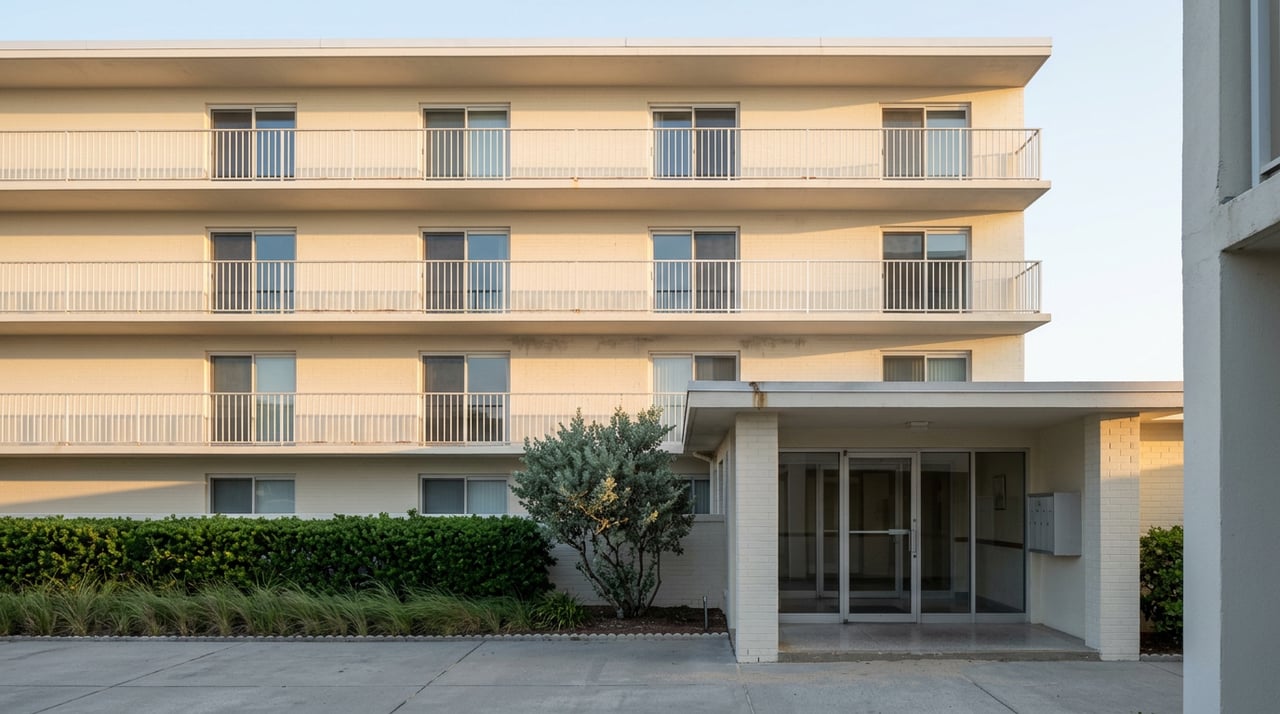
The spread between a Downtown condo and a West End single-family home isn't just about square footage or proximity to the boardwalk. Canal-front and West End properties carry the construction and elevation profile of older, larger single-family stock, which means the flood insurance conversation for those buyers looks different than it does for someone considering a Downtown condo unit, where the building's shared structure and often more recent construction can change the math considerably. The list price gap between neighborhoods is real, but so is the gap in what happens to your monthly number once you factor in coverage.
Worth noting too: the citywide asking price actually eased from $825,000 in April 2026 to $784,000 by August, with the median time on market climbing to 58 days. That's a fairly normal late-summer softening, not a signal of anything structurally wrong with the market. It just means the season you shop in changes your negotiating position more than the flood insurance conversation does, and buyers shouldn't confuse the two.
Fourth-quarter 2025 data compiled by PropertyShark showed something that looks backward at first glance: Long Beach condos gained 31.6 percent year over year, reaching a median sale price of $921,000, while single-family houses stayed essentially flat at $865,000.
That's not a typo, and it's not random noise. It's consistent with everything above. Condo buildings in Long Beach tend to be newer, built or substantially renovated with post-Sandy standards in mind, and the insurance and rebuild-cost variables that drive Risk Rating 2.0 premiums often look more favorable for that kind of construction than for a 1920s single-family home on a barrier island lot. Buyers appear to be pricing in exactly the mechanism this whole piece is about. When two categories of housing carry different structural risk profiles, and insurance pricing has shifted to reward the better-built one, the sale prices start to reflect that even before anyone explicitly does the math.
If you're looking at anything in Zone AE or VE in Long Beach, get answers to these before you get attached to a number:
That last question matters more often than buyers expect once a purchase moves above roughly $1 million in replacement value, which describes a fair number of West End and Canal-front homes at today's prices.
Does every Long Beach home need flood insurance? Any home with a federally backed mortgage in Zone AE, which covers nearly the entire city, is required to carry it. Homes in the lower-risk Zone X may have grandfathered rates if their policy predates the 2009 remapping.
Is the city's CRS discount automatic? The 15 percent discount applies to eligible NFIP policies within city limits, but a building found out of compliance with local floodplain regulations can be excluded until the issue is resolved.
Does the CRS discount apply to private flood policies? No. The discount is tied specifically to NFIP policies. Private carriers set their own rates, though many will factor in a strong Elevation Certificate when pricing a quote.
The median is a fine starting point for narrowing down a search. It is a poor stand-in for the number that actually decides whether a specific Long Beach home fits your budget. That number lives in the Elevation Certificate, the current declaration page, and the CRS documentation, none of which show up on a listing sheet. If you're comparing neighborhoods and want someone to walk through that math with you address by address, Lucky To Live Here knows this island block by block. Contact us and let's find the number that actually matters for your move.

Seasonal
Enjoy apple picking on Long Island during September and October.
Community
Labor Day Weekend Events on Long Island

Community
Lucky To Live Here® Team at SERHANT
Leisure
NYS has 27 state park lands on Long Island that you can explore.
Real Estate
You have to apply for a rental permit and it must be approved before you list.
Lucky to Live Here Realty is built on the skills, passions, and track records of top selling Real Estate Agents who call Long Island home. Known for their community driven efforts, strong social presence, innovative marketing, and wealth of knowledge about the local Real Estate market.

LUCKY TO LIVE HERE AT SERHANT.
129 Main St Cold Spring Harbor, NY 11724